
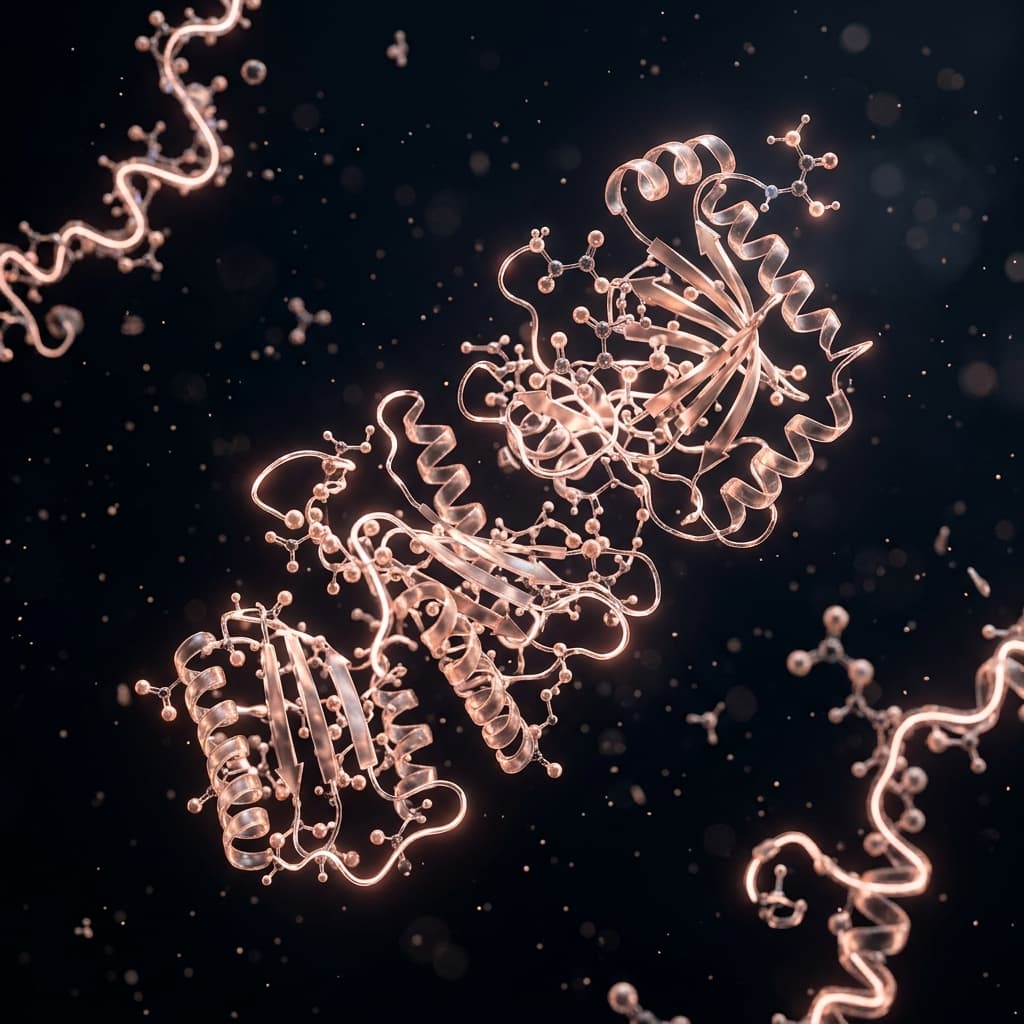
In the landscape of regenerative research, single-compound assays often only tell half the story. The KLOW blend represents a sophisticated approach to in-vitro recovery research, combining four distinct peptides that target various pathways of cellular repair and metabolic efficiency.
The Components of KLOW
KLOW is an acronym representing its four core constituents. While the exact ratios are proprietary to the formulation, understanding the role of each component is vital for designing effective research protocols.
1. BPC-157 (Body Protection Compound)
A staple in tissue repair research, BPC-157 is widely studied for its profound effects on angiogenesis (the formation of new blood vessels) and the acceleration of tendon and ligament healing in vitro.
2. TB-500 (Thymosin Beta-4)
Working synergistically with BPC-157, TB-500 is a naturally occurring peptide that regulates actin, a vital protein for cell structure and motility. In laboratory settings, it is observed to promote rapid cell migration to sites of damage.
3. GHK-Cu (Copper Peptide)
Known for its deep blue hue, GHK-Cu is deeply involved in extracellular matrix remodeling. It has been shown to stimulate collagen synthesis and modulate the breakdown of scar tissue in cultured fibroblasts.
4. NAD+ (Nicotinamide Adenine Dinucleotide)
While not a peptide, NAD+ is a crucial coenzyme found in all living cells. Its inclusion in the KLOW blend provides the metabolic fuel required for the energy-intensive repair processes stimulated by the other three components.
Research Applications
When studying the KLOW blend, researchers typically focus on acute tissue damage models. The synergistic nature of the blend allows for the observation of accelerated healing timelines compared to isolated compounds.
When preparing your assays, ensure you are accounting for the diverse molecular weights and stability profiles of the four components during reconstitution.